
Lotus Symbolism in Chinese Culture: Purity, Buddhism and Art
In Chinese culture, the lotus most often symbolizes purity, moral integrity, spiritual awakening, and the ability to remain principled in an imperfect world. These meanings do not come from one single tradition. Buddhist art made the lotus a sign of awakening and transcendence; the Song thinker Zhou Dunyi turned it into an image of the cultivated “gentleman”; painters valued its changing forms; and decorative artists combined it with other motifs to express peace, wealth, or good fortune.
The Lotus at a Glance
- Chinese names: hehua (荷花) and lianhua (莲花/蓮花) are common terms, with usage changing by context.
- Core meanings: purity, integrity, spiritual awakening, cultured restraint, peace, and auspicious wishes.
- Major traditions: Buddhist iconography, Song Neo-Confucian thought, poetry, ink painting, ceramics, textiles, and garden culture.
- Botanical caution: the sacred lotus, Nelumbo nucifera, is not the same plant as a true water lily in the family Nymphaeaceae.
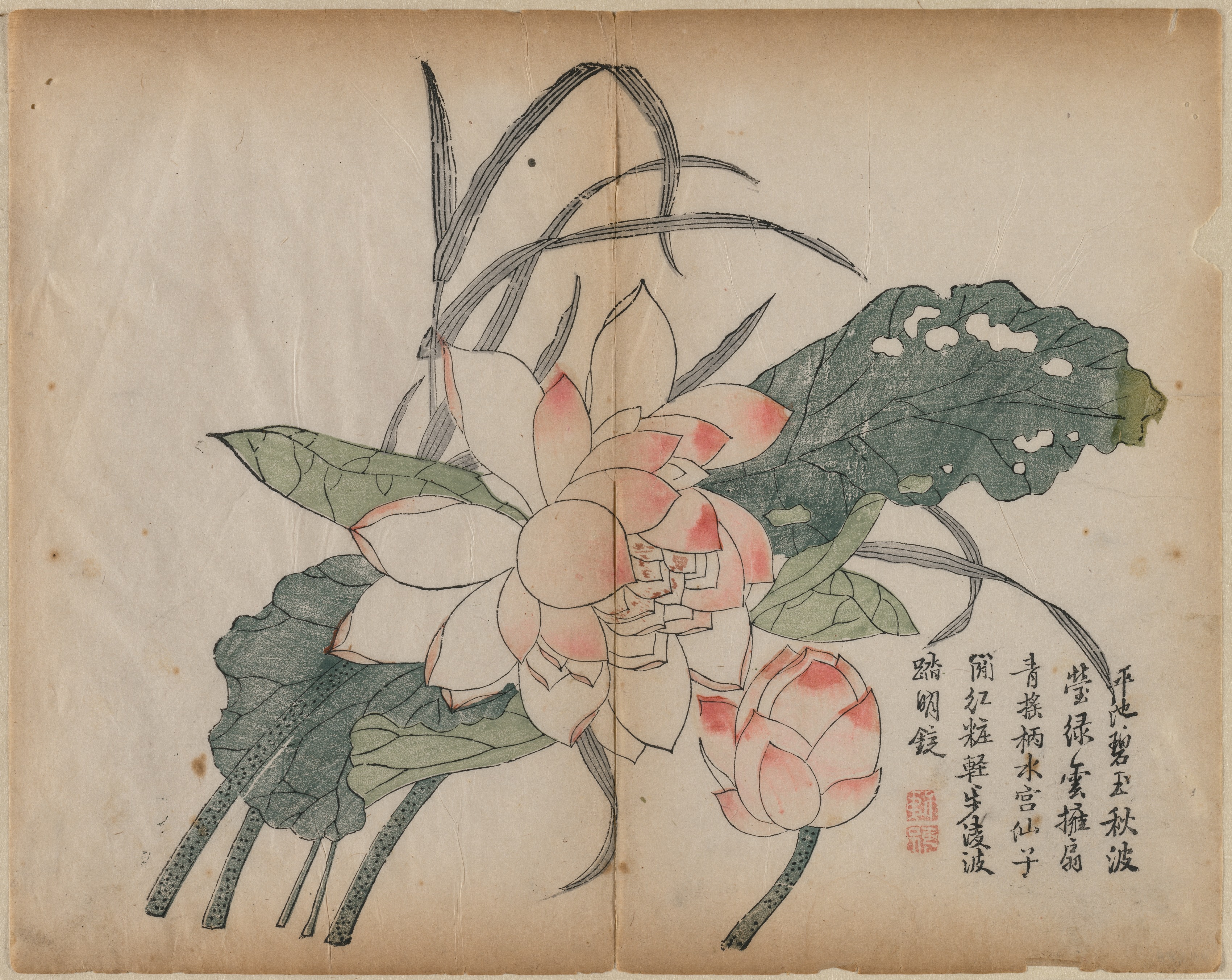
What Does the Lotus Mean in Chinese Culture?
The most familiar answer is purity. A lotus is rooted in mud and rises through water before opening above the surface, so writers and artists could use its growth as a metaphor for a person who passes through difficulty without being morally stained by it. This image supports both Buddhist ideas of spiritual awakening and the Confucian language of ethical self-cultivation, but the two traditions are not identical.
The flower also suggests integrity, graceful restraint, summer, cultivated beauty, and renewal. On a Buddhist sculpture, a lotus pedestal may mark sacred presence. In a scholar’s painting, a weathered leaf and upright stem can become a study of character, ink, and impermanence. On a household textile, blossoms may join coins, ingots, scrolls, or other signs of abundance. The object, date, inscription, and companion motifs determine which meaning is strongest.
That contextual approach matters across Chinese symbolism. Red can convey celebration or authority depending on where it appears, as our guide to red in Chinese culture explains. The same principle applies to the lotus: it is not a one-word code that means exactly the same thing on every painting, robe, altar, vase, or garden pond.
The Lotus in Chinese Buddhist Art
The lotus entered Chinese visual culture partly through the transmission of Buddhism from South and Central Asia. In Buddhist traditions, the flower could signify awakening, transcendence, purity, and the possibility of liberation within a world marked by suffering. Buddhas and bodhisattvas are therefore often shown seated or standing on lotus pedestals, holding lotus buds, or surrounded by lotus petals and scrolls.
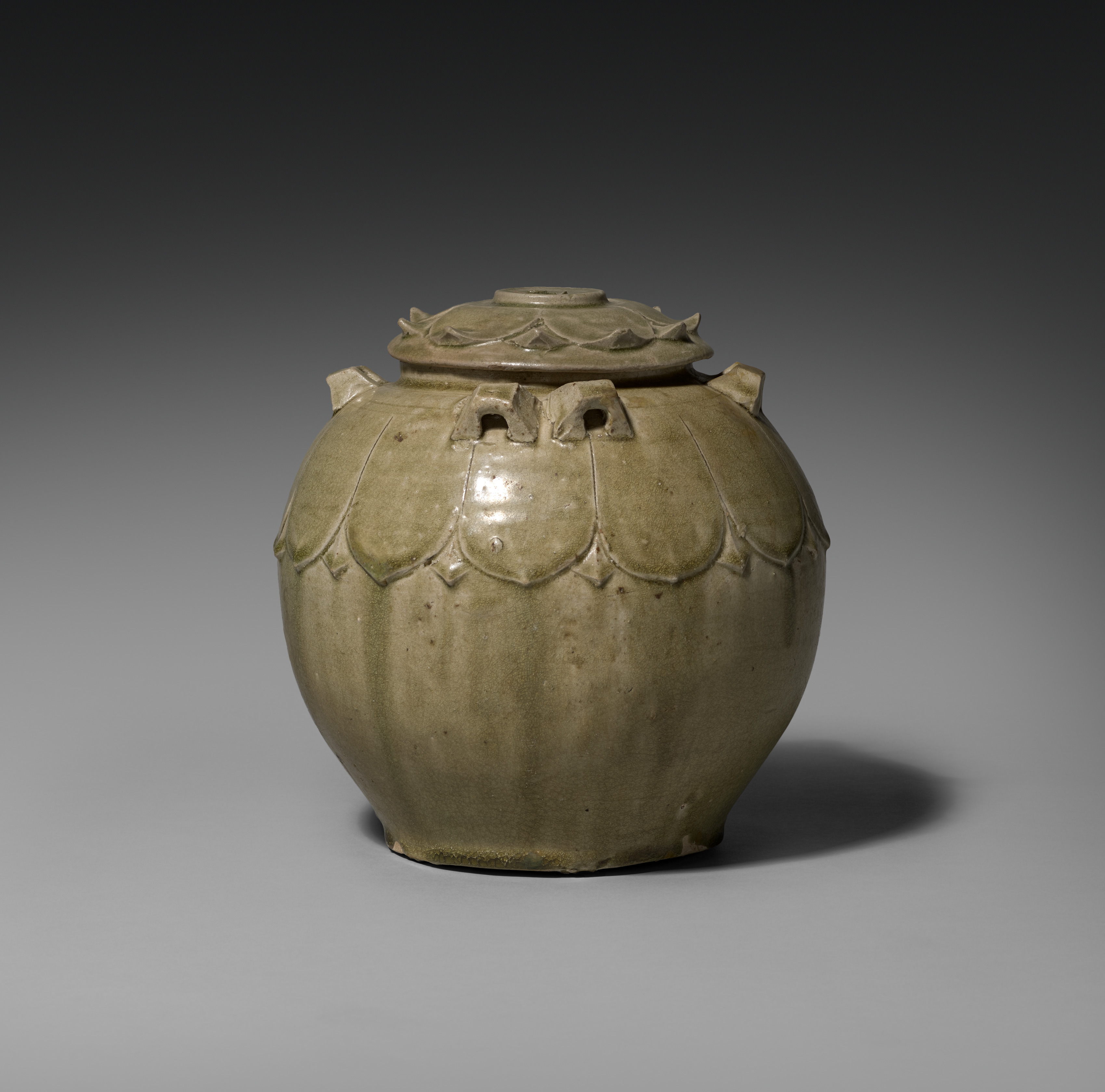
Chinese artists did not merely copy one foreign design. As Buddhist communities, texts, images, and workshops developed in China, lotus imagery was translated into local materials and styles. It appears in cave-temple paintings, stone sculpture, ceramics, metalwork, textiles, architecture, and manuscripts. A Northern Dynasties stoneware jar at the Cleveland Museum of Art, for example, has carved lotus petals around its shoulder and lid; the museum associates the motif with Buddhist purity and detachment from worldly affairs.

A lotus in Buddhist art is therefore more than a decorative flower. It can organize sacred space by supporting an enlightened figure, distinguish a deity from ordinary surroundings, or visualize a teaching about transformation. At the same time, not every lotus on a Chinese object is exclusively Buddhist. Motifs move between religious, courtly, scholarly, and domestic settings, accumulating additional meanings as they travel.
Zhou Dunyi and the “Gentleman Among Flowers”
One of the most influential Chinese interpretations comes from the Northern Song thinker Zhou Dunyi (1017–1073). His short essay Ai lian shuo (爱莲说/愛蓮說, “On the Love of the Lotus”) praises a flower that rises from mud without being defiled, is washed by clear water without becoming showy, grows upright rather than tangled, and sends its fragrance farther as it remains clean.
The familiar phrase 出淤泥而不染 is often translated as “emerging from the mud unstained.” It should not be reduced to a generic motivational slogan. In Zhou’s essay, the lotus is part of a comparison among flowers: the chrysanthemum suggests reclusion, the peony wealth and rank, and the lotus the junzi (君子)—the morally cultivated or exemplary person. Its physical form becomes an ethical portrait.
This association helped make lotus appreciation especially meaningful to later literati. Painters could treat leaves, stems, blossoms, seedpods, and fading forms as an expressive vocabulary. The flower’s beauty mattered, but so did the discipline of the brush, the balance of emptiness and ink, and the viewer’s knowledge of poetry and moral philosophy.
Zhou’s image also traveled beyond China. A seventeenth-century Japanese painting titled Zhou Maoshu Admiring Lotuses shows the Chinese scholar leaning from a boat to study the flowers. Its survival demonstrates that Chinese lotus literature became part of a wider East Asian world of texts, painting, and learned cultivation.
Lotus Imagery in Chinese Painting and Decorative Arts
The lotus gives artists an unusually rich set of forms. Broad leaves can be rendered as flat fields of ink; curled and torn edges record wind, age, and season; straight or bending stems create calligraphic rhythms; blossoms provide pale or saturated accents; and dry seedpods introduce a later stage of the plant’s life. A single pond can therefore hold growth, decay, motion, stillness, and time.
In Birds in a Lotus Pond, painted around 1690, Bada Shanren used absorbent satin and saturated ink to make torn leaves, blossoms, rocks, mynahs, and chicks feel both immediate and enigmatic. The Metropolitan Museum of Art notes the work’s dramatic contrasts between dark and light. The lotus here does not function as a simple diagram of purity; it becomes part of an emotionally charged pictorial world shaped by brushwork and negative space.

Decorative artists adapted the flower differently. Potters turned petals into vessel profiles and repeating borders. Textile makers wove lotus scrolls into brocade. Carvers used overlapping petals to articulate bases, lids, and architectural surfaces. A Yuan-dynasty blue-and-white flask at The Met places a lotus pond around porcelain, connecting a natural subject with the technology and visual movement of cobalt decoration.
By the Qing dynasty, lotus imagery could appear with coins, ingots, scrolls, and rhinoceros-horn forms on interior textiles to convey wealth and good fortune. Such combinations show why an isolated symbol dictionary is not enough: the same lotus can support Buddhist purity in one setting, scholarly integrity in another, and household prosperity in a third.
Peace, Prosperity, and Auspicious Wordplay
Chinese decorative art often builds meaning through sound as well as sight. The word he (荷), used for lotus, sounds like another character, he (和), associated with harmony or peace. The Smithsonian’s National Museum of Asian Art notes this wordplay in a Ming silk tapestry of dragonflies and lotus plants. An artist or viewer could therefore enjoy the flower’s visual beauty, moral associations, and auspicious sound at the same time.
Other meanings emerge from combinations. Lotus with fish, birds, children, vessels, or precious objects may form wishes for abundance, family continuity, harmony, rank, or good fortune. The exact reading depends on the period, region, and specific pun. A lotus beside a dragon or fenghuang should not automatically be read the same way as a lotus beneath a bodhisattva.
This is also why Chinese motifs should be read as visual sentences rather than isolated icons. A Chinese dragon can suggest rain, rulership, vitality, or protection; flowers, waves, clouds, inscriptions, materials, and placement narrow the interpretation. Lotus imagery follows the same contextual logic.
Lotus or Water Lily? A Botanical Distinction
English-language captions sometimes use “lotus” loosely for several aquatic flowers, but the sacred lotus is Nelumbo nucifera. Kew Science places it in the family Nelumbonaceae, separate from true water lilies in the family Nymphaeaceae. Lotus leaves and flowers are commonly held above the water on long stalks, while many water-lily leaves float on the surface.
Historical art does not always allow a modern botanical identification. Stylized petals, damaged objects, translations, and long-established museum titles can blur the distinction. When an institutional catalogue identifies a motif as lotus, this article follows that record; when discussing the living plant, it uses the botanical name. That avoids claiming that every round leaf or aquatic blossom in Chinese art is necessarily Nelumbo nucifera.
How to Read a Lotus Motif
- Identify the setting. Is the flower in a Buddhist image, scholar’s painting, garden scene, textile, ceramic, or household ornament?
- Look at companion motifs. Buddhas, birds, fish, coins, dragons, children, and inscriptions change the reading.
- Check the date and material. A Northern Dynasties religious vessel and a Qing domestic hanging belong to different cultural systems.
- Distinguish evidence from convention. Museum records, inscriptions, and historical texts are stronger evidence than a modern list of “lucky symbols.”
- Allow several meanings to coexist. Purity, beauty, integrity, peace, and prosperity can overlap without becoming interchangeable.
Frequently Asked Questions
Why does the lotus symbolize purity in China?
Its roots grow in mud while the flower opens cleanly above the water. Buddhist art used that transformation as an image of awakening, while Zhou Dunyi later praised the lotus as a model of moral integrity.
Is the lotus only a Buddhist symbol?
No. Buddhism is central to the motif’s history, but Chinese writers, painters, potters, textile makers, gardeners, and household decorators developed scholarly, seasonal, aesthetic, and auspicious meanings as well.
What did Zhou Dunyi say about the lotus?
In On the Love of the Lotus, he praised its emergence from mud without being stained, its upright growth, clean fragrance, and restrained beauty, then called it the “gentleman among flowers.”
Does lotus mean peace in Chinese art?
It can. The word he for lotus can sound like a differently written he associated with harmony or peace. Whether that pun is intended depends on the object and its other motifs.
Are lotus and water lily the same plant?
No. The sacred lotus is Nelumbo nucifera in the family Nelumbonaceae. True water lilies belong to the family Nymphaeaceae, although historical captions and decorative designs may use the English terms loosely.
Sources and Further Reading
- Zhou Dunyi, Ai lian shuo (On the Love of the Lotus), Chinese text
- The Metropolitan Museum of Art, Zhou Maoshu Admiring Lotuses
- Smithsonian National Museum of Asian Art, Dragonfly and lotus plants
- Cleveland Museum of Art, Covered Jar with Carved Lotus Petals
- The Metropolitan Museum of Art, Birds in a Lotus Pond
- Royal Botanic Gardens, Kew, “Sacred lotus — Nelumbo nucifera”
Editorial Note
Written by Heritage Explorer, Founder & Editor of Explore China Heritage. This article separates Buddhist iconography, Song philosophical interpretation, literati painting, decorative art, auspicious wordplay, and modern botanical classification. Artwork details and rights statements follow the cited institutional records.


No comments